




- Website -







 Current Location:
NEWS INFORMATION
Yuyuan Steel Structure
Industrial Building Expansion Joint Design and Thermal Movement Control
AUTHOR:yuyuan DATE:2026-06-27 08:54:41 HITS:125
Understanding Thermal Movement in Steel Structures
Steel structures expand and contract with temperature changes at a predictable rate of approximately twelve millimeters per one hundred meters per ten degrees Celsius temperature change. Industrial buildings with long plan dimensions experience cumulative thermal movements that must be accommodated through expansion joints or flexible connection details. A two-hundred-meter long warehouse subjected to a forty-degree temperature range experiences thermal movement of nearly one hundred millimeters at each end, requiring provision for this movement in the structural and cladding systems.

Failure to accommodate thermal movement leads to distress in the building structure and envelope. Columns and foundations subjected to restraint forces from thermal expansion experience bending and shear that may exceed design capacities. Cladding systems constrained by fixed connections buckle, deform or fail at fastener points when thermal forces overcome connection strength. Proper expansion joint design prevents these problems by providing controlled movement locations that isolate building segments from each other.
Expansion Joint Spacing Guidelines
Building codes and industry standards provide guidance on maximum building dimensions between expansion joints. For steel-framed industrial buildings with heated interiors, expansion joint spacings of one hundred fifty to two hundred meters are typical in moderate climates where temperature differentials between seasons are moderate. Unheated warehouses and structures in severe climates require closer spacing to limit thermal movements to manageable levels. A qualified steel structure manufacturer considers these factors in the structural design to determine appropriate expansion joint locations.
Building geometry influences the optimal expansion joint placement. L-shaped, U-shaped and other irregular plan configurations concentrate thermal movement at re-entrant corners where structural distress is most likely. Positioning expansion joints at these locations addresses the thermal movement while accommodating the geometric complexity. Simple rectangular buildings permit more flexibility in joint placement, often allowing joints to align with column lines for straightforward structural detailing.
Structural Joint Details
Expansion joints in steel frames require double columns at the joint location, with each column supporting one side of the building segment. The gap between columns allows free thermal movement without the columns contacting each other. Connections between the two sides at roof level typically use sliding connections that transfer gravity loads while permitting horizontal movement. Proprietary expansion joint devices provide weatherproof covers that accommodate the design movement range while maintaining weathertight enclosure.
Foundation designs at expansion joints must accommodate the column separation while providing adequate support for each column. Independent footings beneath each column are typical, with sufficient separation to prevent soil pressure overlap between the footings. Where pile foundations are required, each column has its own pile group designed for the column loads without consideration of support from the adjacent column.
Roof and Wall Joint Treatment
Roof expansion joints require covers that maintain weathertight performance while accommodating the design movement range. Metal covers with flexible membranes beneath provide robust solutions for industrial buildings where appearance is less critical than function. The cover system must accommodate not only longitudinal movement parallel to the joint but also differential deflection between the adjacent roof segments that occurs under snow and wind loading.
Wall expansion joints extend from roof to foundation, with the joint width matched to the structural separation at each floor level. Preformed joint seals provide weatherproof closure for joints with moderate movement ranges, while more sophisticated systems with compressible fillers and flexible membranes accommodate larger movements. The wall joint must align with the roof joint to ensure continuous building enclosure around the building perimeter at the expansion joint location.
Maintenance and Inspection
Expansion joint systems require periodic inspection to verify that they continue to function as designed. Sealants and flexible membranes degrade over time due to UV exposure, temperature cycling and environmental contaminants. Compression seals lose resilience after years of cycling, reducing their ability to maintain weathertight closure at movement extremes. Inspection at intervals of three to five years identifies degradation before it progresses to water infiltration or complete seal failure.
Replacement of expansion joint seals requires access to the joint locations, which may involve scaffolding or lift equipment for elevated joints. Planning seal replacement during building maintenance cycles minimizes disruption and cost compared with emergency repairs after water infiltration causes damage to building contents or interior finishes. A manufacturer who provides detailed as-built documentation of expansion joint locations and specifications enables efficient maintenance planning throughout the building life.
Conclusion
Proper expansion joint design prevents thermal movement problems that compromise structural integrity and building envelope performance. Determining appropriate joint spacing, designing functional joint details and planning for ongoing maintenance ensures that industrial buildings accommodate temperature-related movement throughout their service lives. Working with an experienced manufacturer who understands thermal behavior of steel structures produces buildings that perform reliably across decades of temperature variation.
References
American Institute of Steel Construction, Design Guide 7: Industrial Buildings with Crane Runways
American Concrete Institute, ACI 224R Control of Cracking in Concrete Structures
Expansion Joint Manufacturers Association, Technical Guidelines for Building Expansion Joints
National Research Council of Canada, Thermal Expansion of Building Materials
-
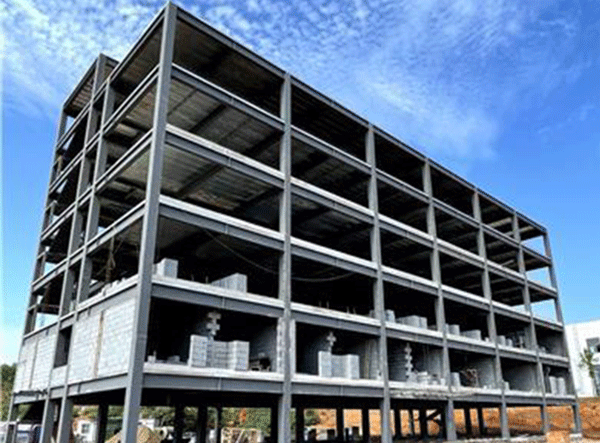
Fast Assembled Multi-Story Steel Structure Workshop Factory For Industrial Use
-
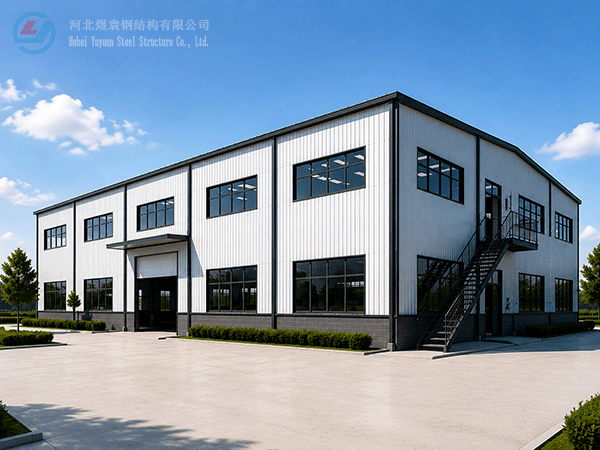
Modern Two-Storey Prefabricated Steel Structure Workshop Building Industrial Shed Construction
-
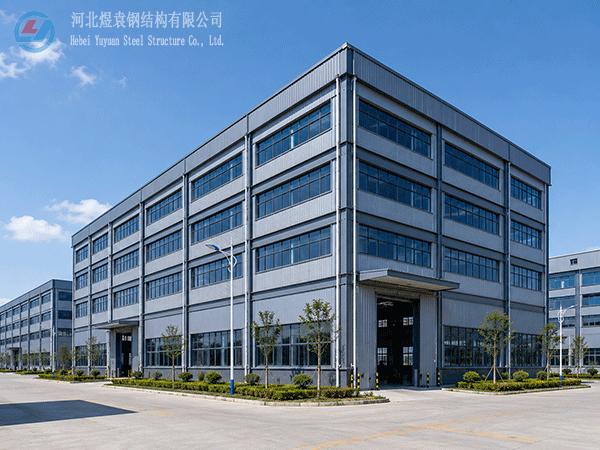
Yuyuan export Steel Structure Warehouse Prefab Steel Structure Warehouse for storage
-
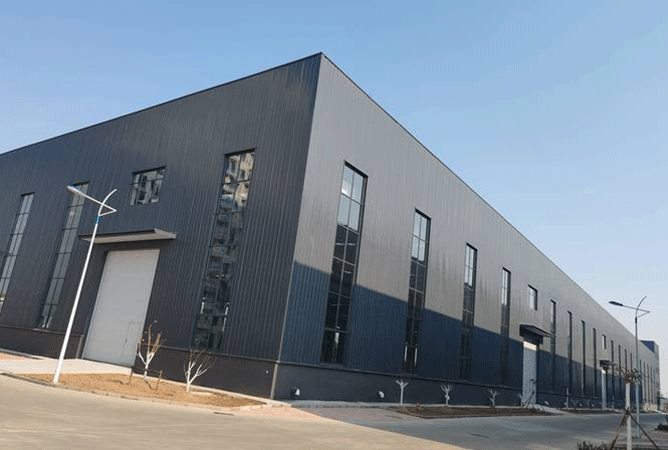
Export steel structure workshops Prefabricated steel structure workshops Light steel structure war
-
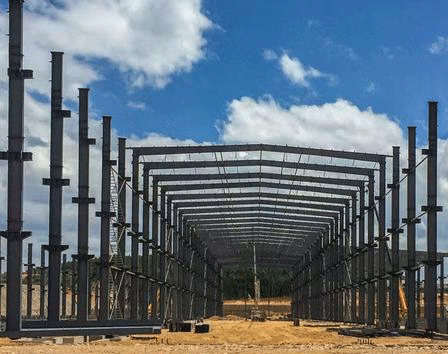
High Quality Low Cost Prefabricated Steel Structure Industrial Warehouse Shed
-
Xiao Sheng - Maldives
-
Xiao Sheng - Maldives
-
Xiao Sheng - Maldives
Hebei Yuyuan Steel Structure Co., Ltd.
Copyright © 2024-2025 https://www.yysteelwarehouse.com. All Rights Reserved Hebei Yuyuan Steel Structure Co., Ltd. All Rights Reserved.