




- Website -







 Current Location:
NEWS INFORMATION
Yuyuan Steel Structure
Main Components of a Prefab Steel Structure
AUTHOR:yuyuan DATE:2026-02-07 22:40:24 HITS:95
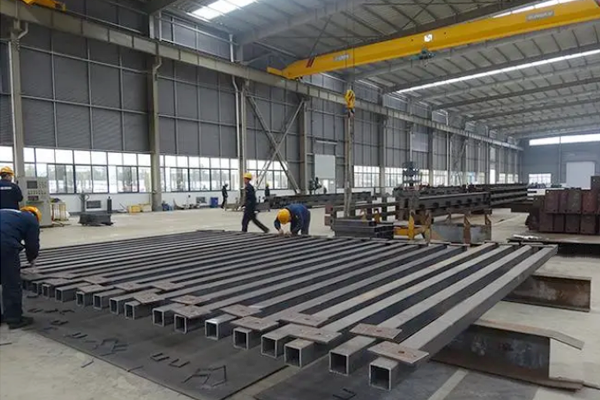
In today’s industrialized construction market, understanding prefab steel structure components is essential for developers, engineers, and contractors who want faster installation, stable quality, and predictable cost control. Prefabricated steel systems are produced in controlled factory environments rather than built entirely on site, allowing professional manufacturer production to deliver consistency, scalability, and performance.
Behind every reliable prefab system is a factory-based production workflow that transforms raw steel into standardized, high-strength building modules ready for bulk supply. By breaking down the main components of a prefab steel structure, project owners can better evaluate performance, safety, and long-term value.
This article explores the core prefab steel structure components and explains how manufacturer-controlled production supports modern construction efficiency.
 |  |
What Are Prefab Steel Structure Components?
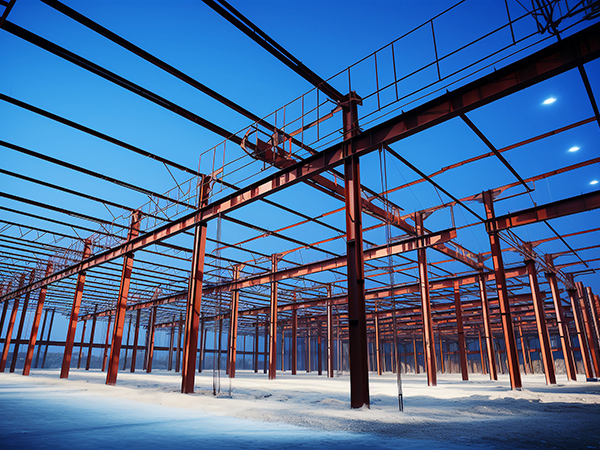
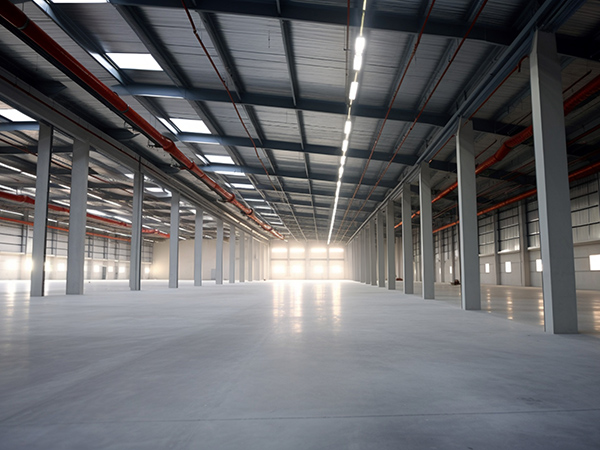
Prefab steel structure components are pre-engineered steel elements manufactured in factories and shipped to project sites for fast assembly. These components are designed to work as a complete structural system that supports loads, resists environmental forces, and simplifies installation.
Key advantages of factory production include:
·Accurate dimensional control
·Stable material quality
·Faster installation cycles
·Reduced on-site labor
·Scalable bulk manufacturing
Each component plays a specific role in structural performance and construction efficiency.
Primary Load-Bearing Components
Steel Columns
Steel columns are vertical members that transfer loads from the roof and floors to the foundation. As critical prefab steel structure components, columns must maintain high compressive strength and dimensional accuracy.
Factory production ensures:
·Precise cutting and welding
·Uniform cross-sections
·Pre-drilled connection holes
·Protective surface coatings
Manufacturer-controlled production improves alignment accuracy during on-site assembly.
Steel Beams and Girders
Beams and girders distribute horizontal loads across the structure. They connect columns and support floors, roofing, and crane systems.
Prefab steel structure components such as beams are produced using:
·CNC cutting
·Automated welding
·Dimensional inspection
·Pre-assembly checks
Factory manufacturing allows beams to be delivered in bulk supply with consistent quality for large projects.
Trusses and Frames
Trusses and frames create large-span roof and wall systems. They provide strength while reducing overall weight.
Production in a factory environment ensures:
·Controlled welding deformation
·Accurate joint fabrication
·Pre-installed connection plates
·Surface corrosion protection
These prefab steel structure components improve both structural stability and architectural flexibility.
Secondary Structural Components
Purlins and Girts
Purlins support roofing sheets, while girts support wall panels. Though lighter than primary members, they are essential prefab steel structure components for system integrity.
Factory production benefits include:
·Roll-formed profiles
·Consistent thickness
·Standardized spacing
·Fast installation compatibility
Bulk manufacturing allows large quantities to be produced efficiently for warehouse and industrial projects.
Bracing Systems
Bracing stabilizes the structure against wind and seismic forces. These prefab steel structure components include:
·Cross bracing
·Tie rods
·Portal frames
Manufacturer production ensures correct tensioning design and precise fabrication to maintain overall stiffness.
Connection and Fastening Components
Bolts and Anchor Systems
Connections determine how well prefab steel structure components work together. High-strength bolts and anchors connect beams, columns, and foundations.
Factory production preparation includes:
·Pre-drilled holes
·Connection plate welding
·Fit-up testing
·Packaging for bulk supply
Reliable fastening improves structural safety and reduces on-site adjustment work.
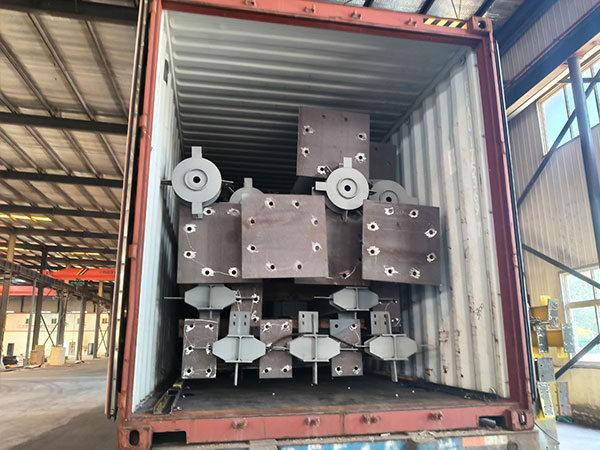
Base Plates and Gusset Plates
Base plates connect columns to foundations, while gusset plates reinforce joints. These prefab steel structure components are precision-machined in factory settings for accurate load transfer.
Manufacturer-controlled production maintains:
·Flatness tolerances
·Hole alignment
·Coating consistency
This ensures smooth installation and long-term performance.
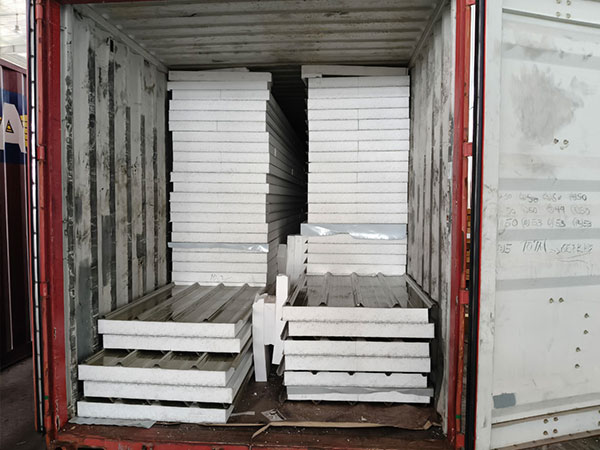
Envelope and Panel Components
Roof Panels
Roof systems protect the building from weather exposure. As prefab steel structure components, roof panels are designed for insulation, drainage, and load resistance.
Factory production provides:
·Uniform thickness
·Edge sealing
·Surface coating
·Modular dimensions
This reduces leakage risks and improves thermal performance.
Wall Panels
Wall panels enclose the structure and contribute to aesthetics and insulation. Factory manufacturing ensures consistent color, coating, and fastening compatibility.
Prefab steel structure components for walls integrate easily with frames, reducing installation time.
Surface Protection Components
Coatings and Galvanization
Surface protection extends the service life of prefab steel structure components. Common treatments include:
·Shot blasting
·Primer application
·Anti-corrosion coatings
·Hot-dip galvanizing
Manufacturer production lines apply coatings under controlled conditions, ensuring uniform thickness and adhesion.
Modular and Customized Components
Prefab systems allow customization within industrial production limits.
Factory production supports:
·Customized spans
·Special load zones
·Crane beam integration
·Mezzanine floors
These prefab steel structure components maintain flexibility while benefiting from standardized manufacturing processes.
Quality Control in Factory Production
Quality control is embedded throughout prefab steel structure manufacturing.
Inspection includes:
·Material verification
·Dimensional checks
·Weld inspection
·Coating thickness tests
·Trial assembly
Manufacturer production systems guarantee batch consistency, making prefab steel structure components reliable for bulk supply projects.
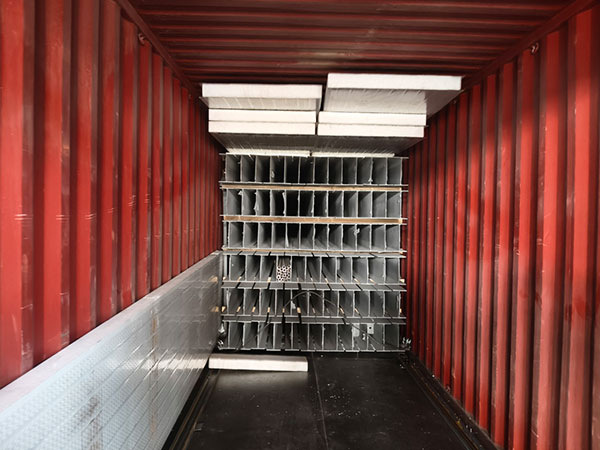
Logistics and Bulk Supply Capability
Large-scale projects rely on coordinated delivery. Factory manufacturing supports:
·Scheduled batch production
·Secure packaging
·Load planning
·Transportation coordination
Instead of handling raw materials on site, clients receive finished prefab steel structure components ready for assembly.
Cost and Efficiency Benefits
Using prefab steel structure components offers:
·Reduced construction time
·Lower labor demand
·Controlled production cost
·Minimal material waste
·Predictable project scheduling
Factory production transforms construction into a repeatable industrial process.
Conclusion: Why Prefab Steel Structure Components Matter
In modern construction, prefab steel structure components form the backbone of efficient, scalable, and durable buildings. From columns and beams to panels and connections, every element is manufactured under controlled factory production systems supported by professional manufacturer bulk supply capability.
By shifting fabrication from job sites into industrial environments, prefab steel structure components deliver higher accuracy, faster installation, and consistent quality for projects of any size.
For developers seeking performance, efficiency, and long-term value, choosing professionally produced prefab steel structure components is a smart investment in modern construction success.
References
GB/T 7714:Gibb A G F. Off-site fabrication: prefabrication, pre-assembly and modularisation[M]. John Wiley & Sons, 1999.
MLA:Gibb, Alistair GF. Off-site fabrication: prefabrication, pre-assembly and modularisation. John Wiley & Sons, 1999.
APA:Gibb, A. G. (1999). Off-site fabrication: prefabrication, pre-assembly and modularisation. John Wiley & Sons.
-
Fast Assembled Multi-Story Steel Structure Workshop Factory For Industrial Use
-
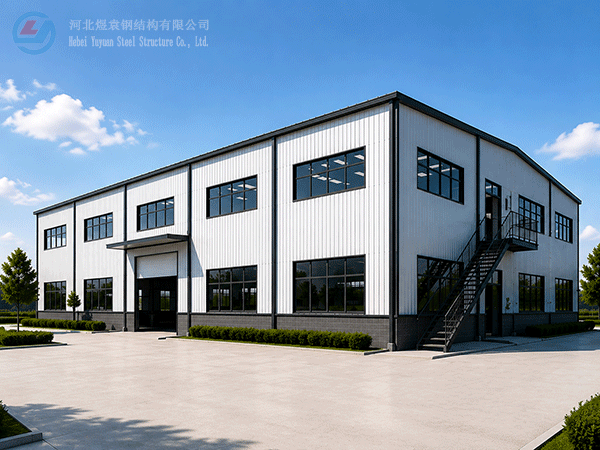
Modern Two-Storey Prefabricated Steel Structure Workshop Building Industrial Shed Construction
-
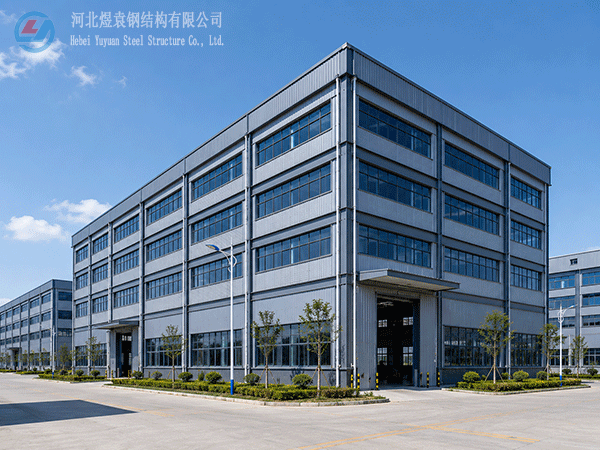
Yuyuan export Steel Structure Warehouse Prefab Steel Structure Warehouse for storage
-
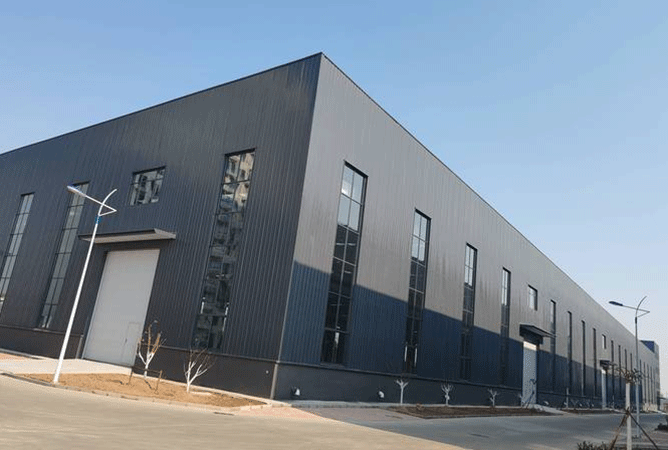
Export steel structure workshops Prefabricated steel structure workshops Light steel structure war
-
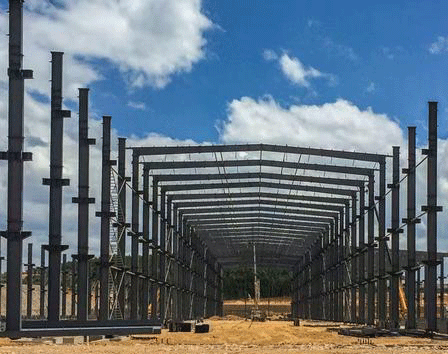
High Quality Low Cost Prefabricated Steel Structure Industrial Warehouse Shed
-
Xiao Sheng - Maldives
-
Xiao Sheng - Maldives
-
Xiao Sheng - Maldives
Hebei Yuyuan Steel Structure Co., Ltd.
Copyright © 2024-2025 https://www.yysteelwarehouse.com. All Rights Reserved Hebei Yuyuan Steel Structure Co., Ltd. All Rights Reserved.