




- Website -







 Current Location:
NEWS INFORMATION
Yuyuan Steel Structure
Multi-Span Steel Structure Warehouse Design Best Practices
AUTHOR:yuyuan DATE:2026-06-12 08:20:54 HITS:72
Structural System Selection
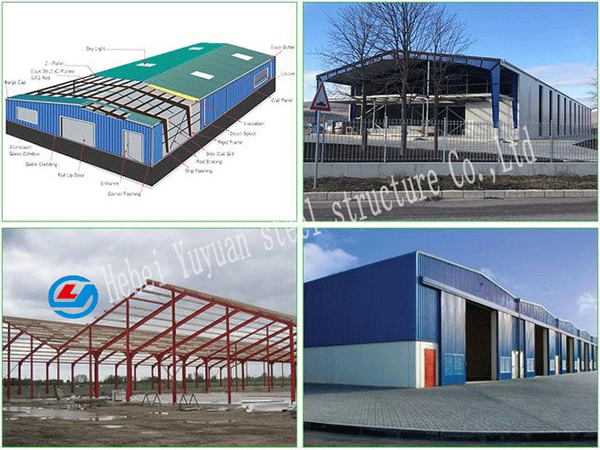
Multi-span warehouses connect multiple frames with interior columns that support shared rafters, creating larger floor areas than a single-span building can achieve economically. The intermediate columns subdivide the total width into multiple narrower bays that reduce rafter sizes and overall building height compared with a single-span solution. For widths exceeding 60 meters, multi-span construction is typically the most cost-effective structural approach because single-span rafters for those dimensions become prohibitively large and expensive.
Available structural options include portal frames with rigid column-to-rafter connections at all bents, which provides maximum stiffness and minimum deflection but requires more complex fabrication and connection detailing. Rigid frame multi-span systems are well suited to warehouses with overhead cranes or other significant point loads that require the stiffness of moment connections. In lighter applications, the economics shift toward multi-span beam and column systems where floors and roofs frame into continuous beams that span between regularly spaced columns.
Optimizing Column Spacing
Column spacing in a multi-span warehouse balances structural efficiency against operational flexibility for the interior layout. Typical spacings of 7.5 to 9 meters create bay widths that align well with standard pallet rack dimensions, allowing racking to run perpendicular to the frames without interference from the columns. Closer column spacing of 6 meters reduces rafter sizes and roof deflections but introduces more columns that constrain forklift circulation and reduce the clear floor area available for storage.
When overhead cranes operate within the building, column spacing must also accommodate the crane runway beam depth and the hook approach dimension that determines how close the crane can position loads to the column face. Adequate clearance between column and rack faces allows forklift drivers to maneuver without the constant repositioning that slows picking operations and increases vehicle wear.
Interior Layout Planning
Early integration of the operational layout with the structural design prevents costly conflicts between column locations and racking systems, production equipment, shipping docks and circulation paths. A qualified manufacturer incorporates the preliminary layout into the structural design process, adjusting column positions within reasonable structural limits to align with the operational requirements of the facility.
Fire compartment design interacts with the interior layout as well, since compartment walls must extend from floor to roof and require structural support at their termini. Positioning these walls to align with column lines simplifies the structural support details and avoids the need for transfer beams or complex penetrations that add cost and construction complexity.
Mezzanine and Multi-Level Options
Multi-span warehouses can incorporate mezzanine floors to add usable area without increasing the building footprint. The intermediate columns provide natural support points for mezzanine beams, making the integration of a partial or full mezzanine level structurally efficient. Mezzanine floors are particularly valuable in high-land-cost locations where expanding the footprint is economically impractical.
The mezzanine structure typically uses composite floor decking with a concrete slab that spans between secondary steel beams, creating a rigid diaphragm that distributes lateral loads back to the primary framing. The mezzanine floor depth and the headroom above and below it must be coordinated carefully with the overall building height to ensure adequate clearance for both the ground-level operations and the mezzanine-level activities.
Roof Drainage in Multi-Span Buildings
Multi-span roof geometries create internal valleys where two roof slopes meet at an interior gutter line. These valleys must handle the rainfall from both adjacent roof slopes and require adequately sized gutters and downpipe systems to prevent overflow during intense storm events. Calculating the design rainfall intensity based on local climate data and the roof area draining to each gutter determines the required gutter cross-section and downpipe capacity.
Box gutters concealed within the roof structure require careful waterproofing detailing and regular inspection access because a leak in a concealed gutter can cause extensive damage to the building interior before it is discovered. External gutters at the eave line are generally preferred from a maintenance perspective because leaks are immediately visible and accessible for repair without disturbing the building interior.
Conclusion
Successful multi-span warehouse design requires integrated consideration of structural efficiency, operational layout, fire safety, roof drainage and future adaptability from the earliest design stages. The complexity of coordinating these systems benefits from engaging an experienced supplier early in the project to identify conflicts and optimization opportunities before design development commits the building to configurations that are difficult or expensive to modify later. A well-designed multi-span warehouse delivers the large clear floor area that many operations require while maintaining the structural economy that makes the project financially viable.
References
Steel Construction Institute, Design of Multi-Storey and Single-Span Industrial Buildings
American Institute of Steel Construction, AISC 360 Specification for Structural Steel Buildings
International Association of Cold Chain Contractors, Cold Storage Facility Design Guidelines
National Association of Steel Service Centers, Warehouse Structural Design Recommendations
-
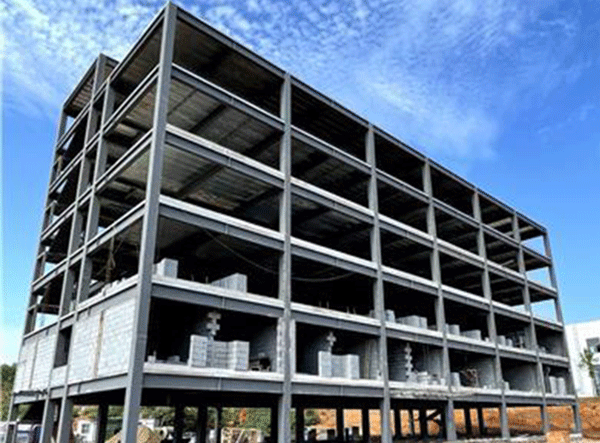
Fast Assembled Multi-Story Steel Structure Workshop Factory For Industrial Use
-
Modern Two-Storey Prefabricated Steel Structure Workshop Building Industrial Shed Construction
-
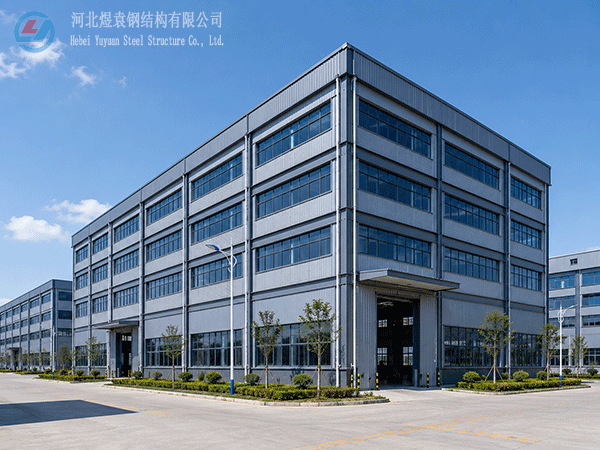
Yuyuan export Steel Structure Warehouse Prefab Steel Structure Warehouse for storage
-
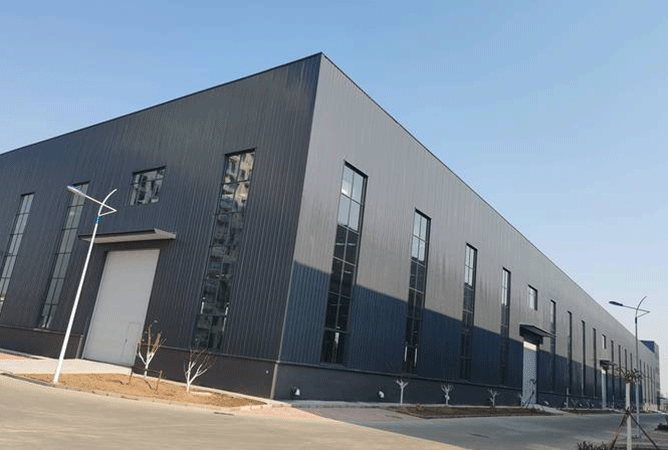
Export steel structure workshops Prefabricated steel structure workshops Light steel structure war
-
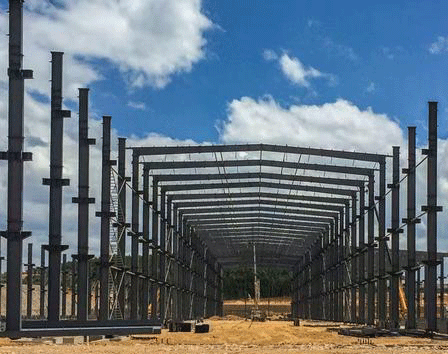
High Quality Low Cost Prefabricated Steel Structure Industrial Warehouse Shed
-
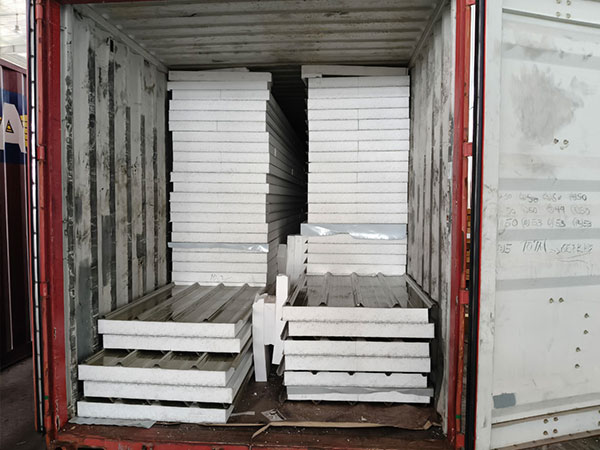
Xiao Sheng - Maldives
-
Xiao Sheng - Maldives
-
Xiao Sheng - Maldives
Hebei Yuyuan Steel Structure Co., Ltd.
Copyright © 2024-2025 https://www.yysteelwarehouse.com. All Rights Reserved Hebei Yuyuan Steel Structure Co., Ltd. All Rights Reserved.