




- Website -







 Current Location:
NEWS INFORMATION
Yuyuan Steel Structure
Overhead Crane Steel Structure Design For Industrial Workshops
AUTHOR:yuyuan DATE:2026-08-12 15:21:33 HITS:60
Heavy manufacturing needs overhead cranes. Moving multi-ton loads across workshop floors requires structural support above the work area. Steel buildings integrate crane runways directly into their frame designs, eliminating separate support structures.
Designing for crane loads differs from standard warehouse design. Moving weights create dynamic forces exceeding static loads. Impact, acceleration, and lateral sway demand robust structural members. Buildings that support cranes need heavier columns, larger beams, and carefully designed connections.
Types Of Overhead Crane Systems
Top-running cranes ride rails atop runway beams. This configuration handles the heaviest loads - commonly up to 50 tons or more. Wheels roll along the top flange of beams supported by columns.
Under-running cranes hang from beams suspended between columns. Lower capacities suit these systems - typically under 10 tons. Under-running designs allow crane coverage beneath existing ceilings without modifying roof structure.
Monorail systems support hoists on a single beam path. Loads move along predetermined routes rather than across a rectangular area. Manufacturing lines use monorails for sequential processing operations.
Crane Load Calculations
Lifted weight represents the obvious load. But cranes generate additional forces. Trolley movement across the bridge creates lateral loads. Bridge travel along the runway generates longitudinal forces. Starting and stopping loads creates impact factors.
Impact factors increase design loads by 10-25% depending on crane speed and application. Fast-moving production cranes experience higher impacts than slow maintenance cranes. Structural calculations include these factors.
Side thrust occurs when trolleys move across the crane bridge. This lateral force transfers through wheel flanges to runway beams. Columns must resist this force in addition to vertical loads.
Runway Beam Design
Runway beams span between columns, supporting crane rails. Wide-flange shapes commonly serve this purpose. Beam size depends on span length, crane capacity, and load combinations.
Continuous beams span multiple columns without joints. This design reduces beam depth compared to simply supported spans. However, continuous beams create negative moments at columns, affecting column design.
Rail attachment methods vary. Bolted clips hold rails to beam top flanges. This method allows rail adjustment and replacement. Welded rails eliminate maintenance but complicate future modifications.
Column Design Considerations
Columns supporting crane runways experience combined loading. Vertical loads from the crane add to dead and live loads from the building itself. Lateral loads from crane operation create bending moments.
Column stiffness affects crane operation. Excessive deflection under load makes crane operation jerky. Drivers struggle to position loads precisely. Structural designers specify deflection limits based on crane manufacturer recommendations.
Bracing systems transfer lateral loads to foundations. Cross-bracing between columns resists wind, seismic, and crane lateral forces. Some designs use moment-resisting frames instead of bracing to maintain open bay access.
Building Integration Approaches
Separate crane columns stand independent of building columns. This approach suits retrofits where existing buildings lack crane support capacity. Separation also prevents building vibrations from affecting crane operation.
Integrated designs combine crane and building columns. Single columns support both roof structure and crane runway. This efficient approach reduces foundation costs and saves floor space. New buildings often use integrated designs.
Stepped columns feature wider sections at crane support elevation. This design provides runway support while minimizing material above and below. Fabrication complexity increases compared to uniform columns.
Connection Details Matter
Runway beam-to-column connections transfer vertical and horizontal forces. Bolted connections allow adjustment during installation. Welded connections provide rigid joints but require precise fabrication.
Expansion joints accommodate thermal movement. Long buildings with multiple cranes need joints at appropriate intervals. Cranes cannot cross expansion joints, so plan crane coverage zones accordingly.
Bumpers and stops prevent crane overtravel. End stops attach to runway beams, absorbing impact when cranes reach travel limits. These safety features protect both crane and building structure.
Electrical And Control Integration
Crane power supply systems attach to runway beams. Busbar conductors deliver electricity along runway length. Collector shoes on cranes maintain contact while moving. Design building structure to support busbar mounting.
Control systems vary by application. Pendant controls trail cables from the crane. Radio controls allow operators freedom of movement. Cabin controls suit heavy-duty applications requiring full-time operators.
Lighting and maintenance access require consideration. Runway beams need walkways for inspection and repair. Lighting at crane level illuminates work areas below. Coordinate these features with structural design.
Selecting Qualified Manufacturers
Crane building experience matters more than general steel structure expertise. Ask potential suppliers about previous projects with similar crane capacities. Request case studies showing integrated designs.
Coordination between crane and building suppliers prevents conflicts. Runway beam elevations, column positions, and bracing locations must accommodate crane requirements. Early coordination identifies potential problems before fabrication.
Engineering support during design provides confidence. Structural calculations should address crane loads specifically. Generic building designs modified for cranes may lack appropriate load path analysis.
Maintenance And Inspection
Crane runway inspections occur regularly. Check rail alignment, fastener tightness, and beam condition. Track wear on rail surfaces and wheel treads. Misalignment accelerates wear on both components.
Structural inspections assess column conditions. Look for cracks, corrosion, or connection problems. Heavy industrial environments with constant crane operation stress structures more than occasional-use facilities.
Keep maintenance records documenting inspection findings. These records support regulatory compliance and inform repair decisions. Address problems promptly to prevent structural damage from compounding.
References:
CMAA - Crane Manufacturers Association of America. (2024). Crane runway design specifications.
American Institute of Steel Construction. (2024). Design guide for crane-supporting steel structures.
American Society of Mechanical Engineers. (2024). ASME B30.2: Overhead and gantry cranes safety standard.
-
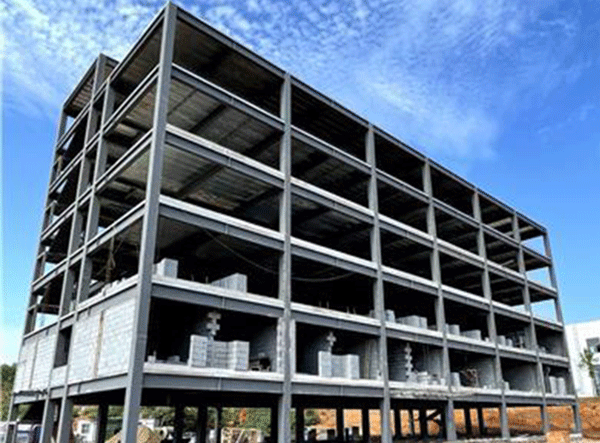
Fast Assembled Multi-Story Steel Structure Workshop Factory For Industrial Use
-
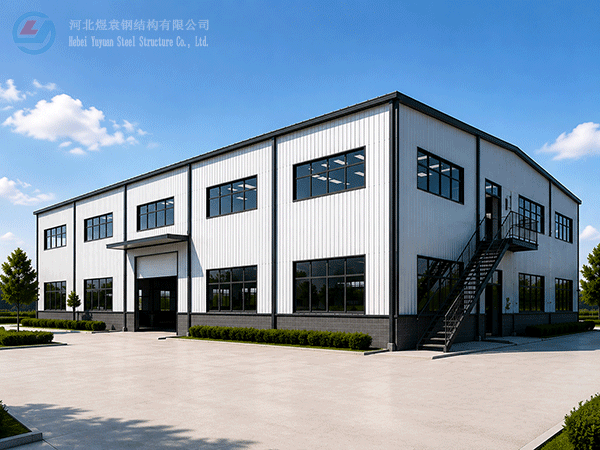
Modern Two-Storey Prefabricated Steel Structure Workshop Building Industrial Shed Construction
-
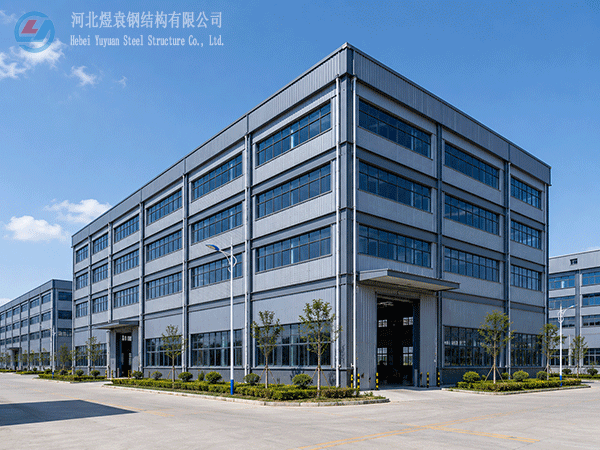
Yuyuan export Steel Structure Warehouse Prefab Steel Structure Warehouse for storage
-
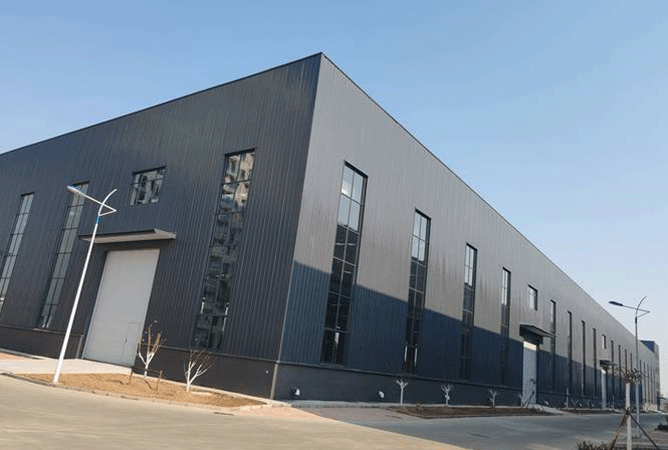
Export steel structure workshops Prefabricated steel structure workshops Light steel structure war
-
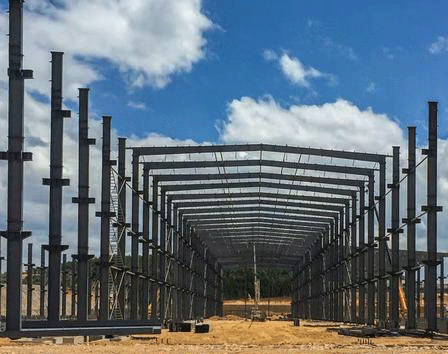
High Quality Low Cost Prefabricated Steel Structure Industrial Warehouse Shed
-
Xiao Sheng - Maldives
-
Xiao Sheng - Maldives
-
Xiao Sheng - Maldives
Hebei Yuyuan Steel Structure Co., Ltd.
Copyright © 2024-2025 https://www.yysteelwarehouse.com. All Rights Reserved Hebei Yuyuan Steel Structure Co., Ltd. All Rights Reserved.