




- Website -







 Current Location:
NEWS INFORMATION
Yuyuan Steel Structure
Steel Structure Connection Welding Quality and Inspection Standards
AUTHOR:yuyuan DATE:2026-06-30 09:09:20 HITS:147
Welding Processes in Structural Fabrication
Shielded metal arc welding, gas metal arc welding and submerged arc welding represent the primary processes used in structural steel fabrication shops. Each process offers distinct advantages for specific joint configurations and production volumes. Gas metal arc welding with flux-cored electrodes provides high deposition rates for fillet welds that connect plates, stiffeners and connection details in typical portal frame fabrication. Submerged arc welding suits long continuous welds in built-up plate girder fabrication where the flux blanket protects the molten weld pool from atmospheric contamination.

Qualified welding procedures specify the process parameters, filler metal classification, joint preparation details and preheat requirements that produce sound welds meeting structural quality standards. Procedure qualification records document that the specified parameters produce welds with adequate mechanical properties and soundness for the intended application. A reputable steel structure factory maintains qualified procedures for all weld types produced in their facility, with documentation available for customer and third-party review.
Welder Qualification Requirements
Structural welding requires personnel who have demonstrated competence through qualification testing that simulates production conditions. Welder performance qualifications document that each welder can deposit sound weld metal using the qualified procedures for the joint types and welding positions they will encounter in production. Qualification testing typically involves radiographic or ultrasonic examination of test coupons, plus bend tests and tensile tests that verify weld metal properties.
Qualification records include the welder identification, the procedure specification used, the joint type and welding position tested, and the examination results that demonstrate acceptable weld quality. These records must be maintained current, with periodic requalification required when welders have been inactive in a given process or when procedure changes affect the welding conditions. A well-managed fabrication shop tracks welder qualifications to ensure only qualified personnel perform structural welding on production work.
Non-Destructive Examination Methods
Visual inspection by qualified personnel identifies surface defects such as undercut, porosity, incomplete fusion and incorrect weld size that affect structural integrity. All structural welds receive visual inspection before acceptance, with documentation of inspection results in fabrication records. For critical connections where weld integrity is essential to structural performance, additional non-destructive examination methods provide verification of internal weld quality.
Ultrasonic testing uses high-frequency sound waves to detect internal discontinuities in weld metal and adjacent base metal. This method suits complete joint penetration groove welds in column-to-rafter connections and similar critical joints where weld defects could cause structural failure. Radiographic testing with X-ray or gamma-ray sources produces images of internal weld structure that reveal porosity, slag inclusions and lack of fusion. The choice between ultrasonic and radiographic methods depends on joint geometry, material thickness and the specific defect types of concern for each application.
Defect Acceptance Criteria
Weld quality standards specify the types and sizes of discontinuities acceptable in structural welds. AWS D1.1, the structural welding code widely used in North America, categorizes welds by their stress level and provides corresponding acceptance criteria. Cyclically loaded structures such as bridges and crane supports require more stringent weld quality than statically loaded building frames because fatigue cracking initiates at weld discontinuities under repeated loading.
Acceptance criteria distinguish between crack-like defects that propagate under stress and volumetric defects such as porosity that have less severe effects on structural performance. Sizes of acceptable porosity and slag inclusions increase with weld size and decrease with stress level, reflecting the reduced structural significance of small volumetric defects. When examination reveals defects exceeding acceptance limits, the manufacturer must perform repair welding that removes the defective material and deposits sound weld metal under controlled conditions.
Quality Management Systems
Effective welding quality control requires systematic management of materials, procedures, personnel and processes throughout the fabrication operation. ISO 3834 provides an international framework for welding quality requirements, with different levels of certification appropriate for different types of fabrication. Steel structure manufacturers with ISO 3834 certification have demonstrated that their quality management systems meet recognized standards for welding quality control.
Quality records including material test certificates, procedure qualification records, welder qualification records and examination reports provide traceability that links each weld to the materials, procedures and personnel involved in its production. This documentation enables investigation of any quality issues that arise during fabrication or in service, supporting continuous improvement in welding quality. A manufacturer committed to quality maintains comprehensive records and makes them available for customer and third-party review.
Conclusion
Welding quality in structural connections directly affects building safety and service life. Qualified welding procedures, trained and certified welders, appropriate examination methods and systematic quality management combine to produce connections that perform reliably under design loads. Selecting a manufacturer with demonstrated commitment to welding quality ensures that structural connections meet the standards necessary for safe building performance throughout the structure service life.
References
American Welding Society, AWS D1.1 Structural Welding Code for Steel
International Organization for Standardization, ISO 3834 Quality Requirements for Welding
American Society for Nondestructive Testing, Personnel Qualification and Certification Standards
Canadian Standards Association, CSA W59 Welded Steel Construction Standard
-
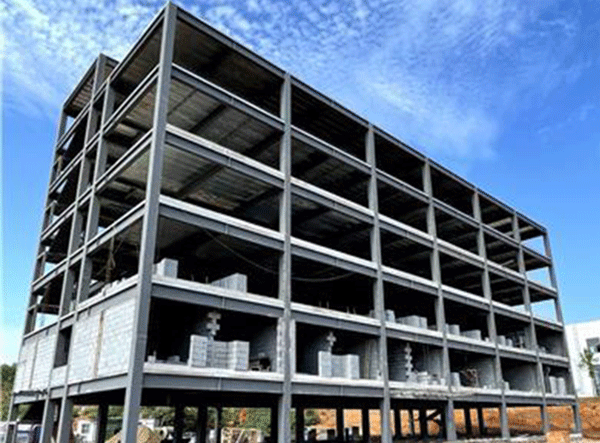
Fast Assembled Multi-Story Steel Structure Workshop Factory For Industrial Use
-
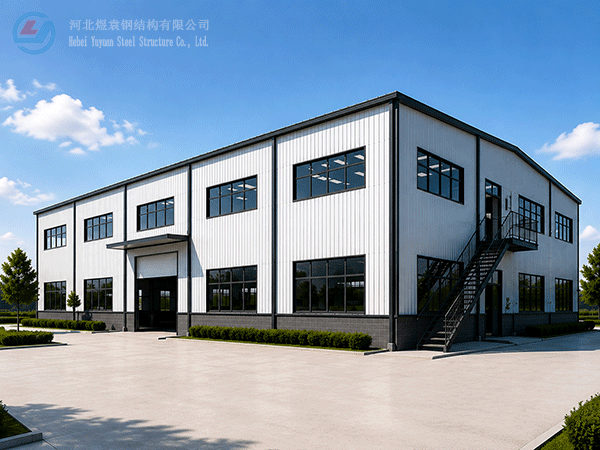
Modern Two-Storey Prefabricated Steel Structure Workshop Building Industrial Shed Construction
-
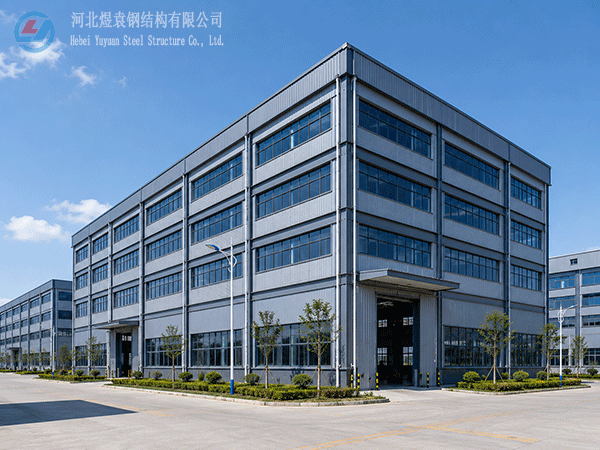
Yuyuan export Steel Structure Warehouse Prefab Steel Structure Warehouse for storage
-
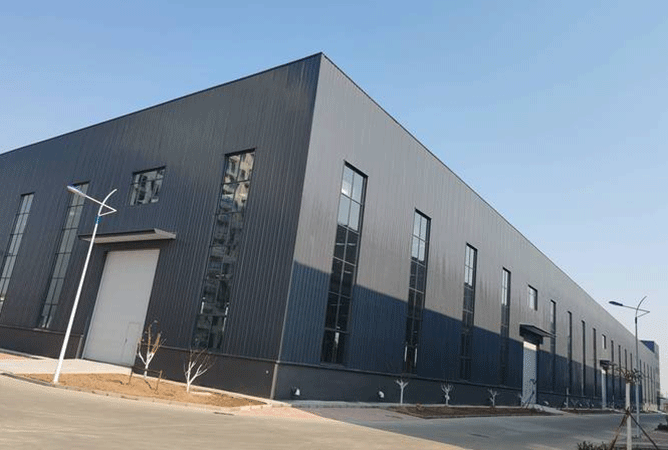
Export steel structure workshops Prefabricated steel structure workshops Light steel structure war
-
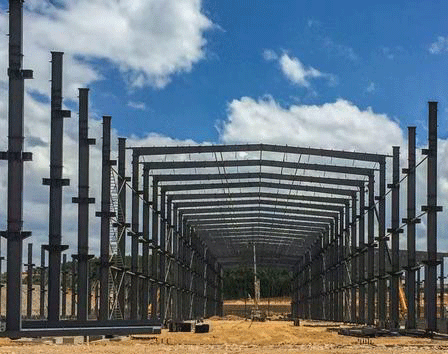
High Quality Low Cost Prefabricated Steel Structure Industrial Warehouse Shed
-
Xiao Sheng - Maldives
-
Xiao Sheng - Maldives
-
Xiao Sheng - Maldives
Hebei Yuyuan Steel Structure Co., Ltd.
Copyright © 2024-2025 https://www.yysteelwarehouse.com. All Rights Reserved Hebei Yuyuan Steel Structure Co., Ltd. All Rights Reserved.