




- Website -







 Current Location:
NEWS INFORMATION
Yuyuan Steel Structure
Z Purlin vs C Purlin: Choosing the Right Profile for Steel Buildings
AUTHOR:yuyuan DATE:2026-06-24 08:39:39 HITS:151
Understanding the Geometric Difference
The fundamental distinction between z and c purlins lies in their cross-section geometry and the resulting implications for how they behave under load. A c purlin, shaped like the letter C, has its flanges facing in a single direction, which means it performs differently when loaded from the left versus the right. A z purlin, shaped like the letter Z, has flanges that extend in opposite directions from the web, creating a symmetric or near-symmetric section about the plane of the roof slope that provides more consistent structural performance regardless of which direction the load approaches from.
This geometric difference has profound implications for continuous span systems where purlins span over multiple supports. When z purlins overlap at interior supports, the flanges on opposite sides align and can be bolted together effectively, creating a continuous beam action that distributes moment from the weak axis of one span to the strong axis of the adjacent span. C purlins cannot achieve this benefit because their flanges point in the same direction, and lapped c purlins require separate cleat connections at each support that do not provide the same moment transfer capability.

Continuous Span Performance
In practice, z purlins consistently outperform c purlins in continuous span configurations because the overlapping flange detail creates a true continuous beam at interior supports. The moment redistribution that occurs in a continuous beam reduces the maximum bending moment in each span compared with a simply supported beam of the same span length, allowing lighter purlin sections to carry the same design load. This section weight reduction translates directly into material cost savings that often exceed the modest additional cost of z purlin overlap connections.
For roofs with purlin spans exceeding 6 meters, which is common in large warehouses with wide bay spacings, the continuous span efficiency of z purlins provides meaningful structural economy. Engineers routinely specify z purlins for spans above 7.5 meters specifically because the continuous action offsets the cost of the additional material in the deeper z section compared with an equivalent c purlin.
Installation Efficiency
Both z and c purlins are efficiently installed using bolted cleat connections to rafters and ridge beams. The installation sequence for z purlins at overlaps requires careful attention to bolt orientation to ensure the lapped flanges are drawn together uniformly. When specified with standardized overlap lengths and consistent bolt patterns, z purlin installation proceeds rapidly because crews develop familiarity with the repetition and can work without measuring each connection individually.
C purlins are somewhat simpler to handle and position during installation because their asymmetric geometry provides a natural leading edge when placing them on the cleats. For very simple roof geometries with short spans where continuous span benefits are minimal, c purlins may offer a practical installation advantage that offsets their structural limitations.
Roof Stability and Diaphragm Action
The roof diaphragm, comprised of roof panels fastened to purlins, provides horizontal distribution of lateral wind loads to the end frames of the building. Z purlins contribute more effectively to this diaphragm action than c purlins because their symmetric geometry does not induce twisting under asymmetric loading from wind suction on opposite sides of the roof. This torsional stability translates into more reliable load transfer through the roof diaphragm to the primary framing.
When diaphragm action is relied upon for lateral load resistance, the connection between purlins and panels must be sufficiently detailed and executed to ensure the panel-to-purlin fasteners develop the shear capacity the design assumes. Both z and c purlins can achieve adequate diaphragm performance when properly connected, but z purlins provide a more forgiving geometry when fastener spacing or installation quality varies across the roof area.
Cost Considerations
Z purlins typically cost 5 to 15 percent more per linear meter than equivalent c purlins due to the additional material in the wider bottom flange that creates the z shape. However, when continuous span analysis demonstrates that a lighter z purlin section can carry the design load where a heavier c purlin would be required, the material cost differential often reverses in favor of z purlins for spans above 6 meters. The overlap connection hardware adds bolt and labor cost, but this is typically modest relative to the purlin material savings.
For short-span roofs below 5 meters where continuous span benefits are minimal, c purlins are usually the more economical choice. The decision should be based on engineering analysis rather than assumption, as the span threshold where z purlins become cost-effective varies with loading conditions, steel prices and local labor rates.
Conclusion
Z purlins provide superior structural performance in continuous span applications and offer meaningful material savings for medium and long-span roof systems. C purlins remain appropriate for simple short-span applications where their lower cost and easier handling provide practical advantages. Engaging an experienced engineer to analyze the specific span and loading conditions for your project determines the most economical choice for each portion of the roof system.
References
American Iron and Steel Institute, Cold-Formed Steel Design Manual and Commentary
Steel Construction Institute, Worked Examples for the Design of Steel Buildings
EN 1993-1-3: Eurocode 3 Design of Steel Structures, Cold-Formed Thin Gauge Members
Metal Building Manufacturers Association, Technical Manual for Low Rise Building Systems
-
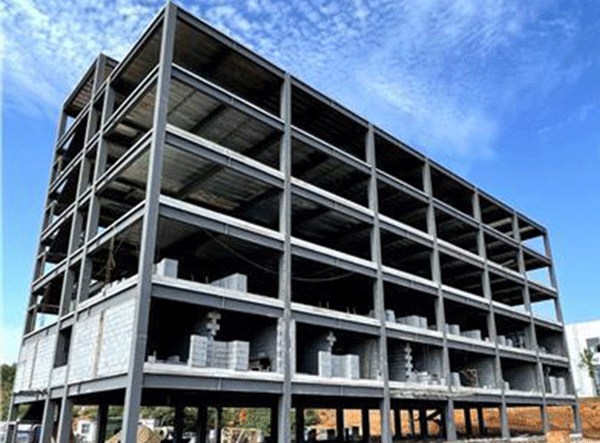
Fast Assembled Multi-Story Steel Structure Workshop Factory For Industrial Use
-
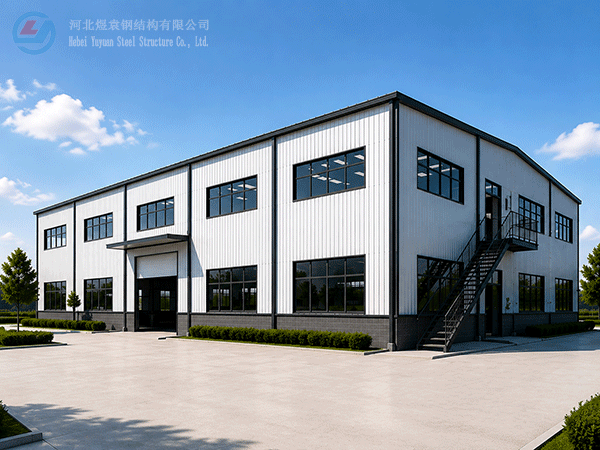
Modern Two-Storey Prefabricated Steel Structure Workshop Building Industrial Shed Construction
-
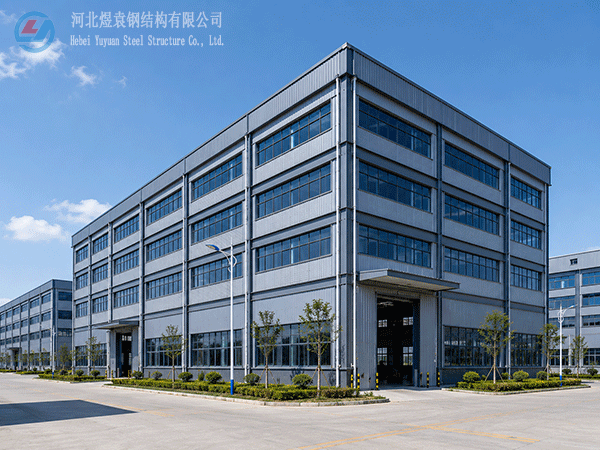
Yuyuan export Steel Structure Warehouse Prefab Steel Structure Warehouse for storage
-
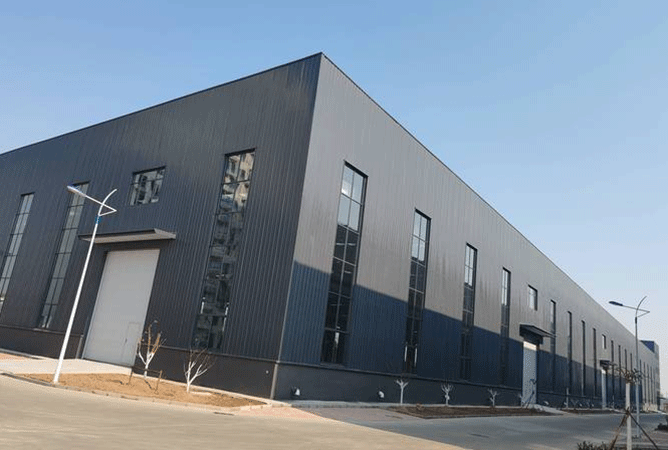
Export steel structure workshops Prefabricated steel structure workshops Light steel structure war
-
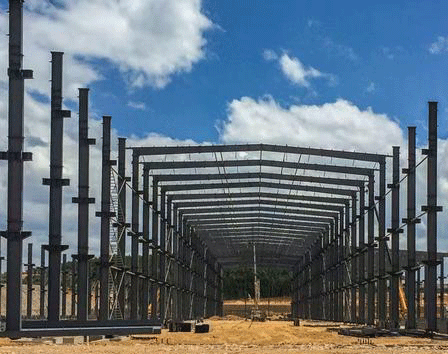
High Quality Low Cost Prefabricated Steel Structure Industrial Warehouse Shed
-
Xiao Sheng - Maldives
-
Xiao Sheng - Maldives
-
Xiao Sheng - Maldives
Hebei Yuyuan Steel Structure Co., Ltd.
Copyright © 2024-2025 https://www.yysteelwarehouse.com. All Rights Reserved Hebei Yuyuan Steel Structure Co., Ltd. All Rights Reserved.